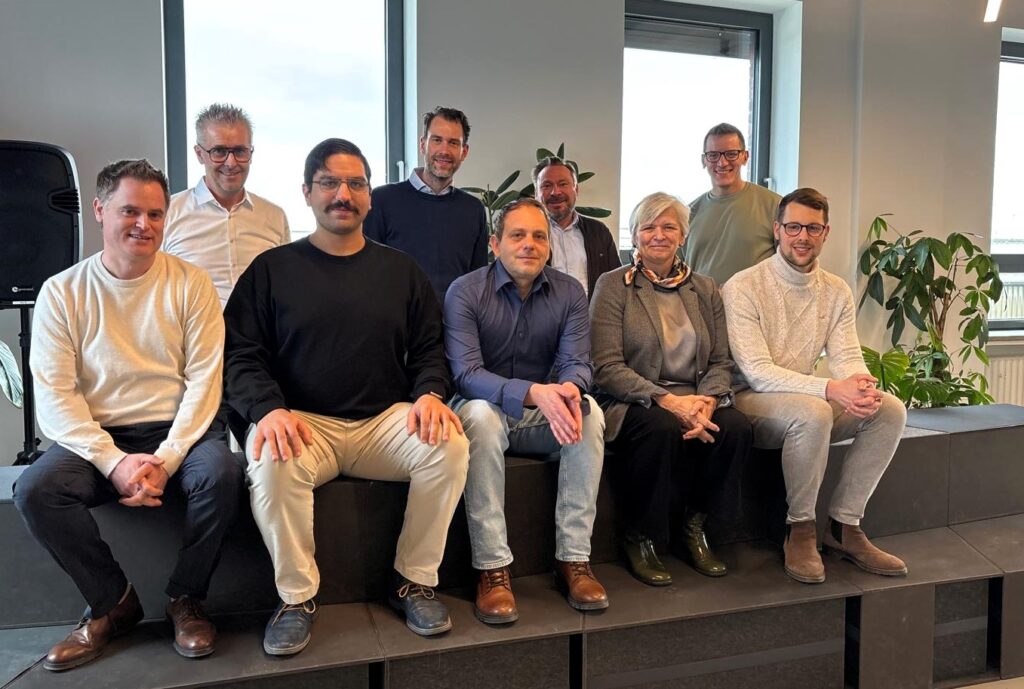
From September 2025 to January 2026, managers from member companies took part in the “Operations Managers – Production and Logistics” qualification as part of our NIRO Academy. The program comprised seven days of training and developed operational managers specifically in the areas of lean management, project management, leadership and communication so that they can apply the content directly in internal company projects.
The training was divided into three modules. The program was supplemented by collegial case consultations and a final workshop with the respective supervisors.
Structure and content of the qualification
The “Lean Management” module focused on the efficient design of processes, the use of proven tools and methods and the continuous improvement process.
The “Project Management” module taught the basics of planning, implementing and evaluating projects and highlighted the differences between agile and traditional project management. Another focus was on the structured presentation of project results.
In the “Leadership, motivation and conflict” module, participants dealt with leadership styles, communication, change management and self-reflection.
A central element of the training were three collegial case consultations in which current challenges from the participants’ day-to-day work were analyzed and discussed together.
Company projects with direct practical relevance
All participants worked on a specific project from their company during the programme.
The “Material flow and storage area optimization” project aimed to install a new production floor in order to restructure the material flow and make storage areas more efficient.
A structured basis for maintenance was created in the “Creation and introduction of a maintenance and cleaning plan” project. This project is closely linked to the ongoing introduction of 5S in the company.
The project “Optimization of the throughput time for annealing base bodies” aimed to systematically analyse and sustainably reduce the throughput time. As part of a collegial case consultation, the participants learned about value stream mapping on site at the company, jointly analyzed the material and information flow, identified bottlenecks and idle times and derived specific potential for improvement.
Strategic investment decisions were the focus of the “Modification of a machining center (WFL) for cross-location production”. Following a systematic review of various options, an economical solution was implemented that avoided high investment costs and opened up new production possibilities across locations.
Final workshop and feedback
In the final workshop, the participants presented their project results to their superiors. This clearly demonstrated the benefits of the practical orientation of the program.
One supervisor emphasized that the direct transfer of theory into practice was particularly convincing and that the results were visible in everyday working life. Another advantage mentioned was that the project work has an impact beyond the program and provides valuable impetus for further projects.
The participants also drew a positive conclusion. They particularly emphasized the direct application of what they had learned, the quality of the trainers and the professional and personal exchange within the network.