How can artificial intelligence and MS Copilot be used in practice in day-to-day procurement?
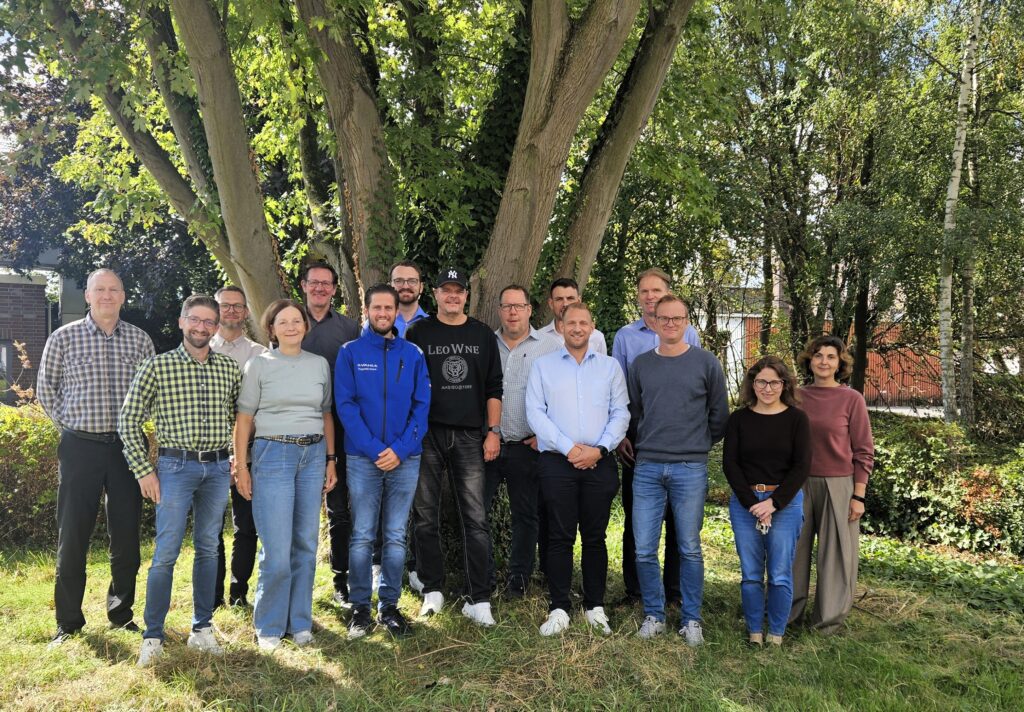
An exclusive training session held on September 10, 2026, at our NIRO Hafenraum facility addressed this question. We invited procurement managers who are actively involved in our Procurement Working Group, the negotiation groups, and the further development of our procurement pool.
Frank Sundermann of Durch Denken Vorne Consult GmbH led this workshop, in which participants were able to explore the tasks for which AI can already provide meaningful support today.
To begin, Frank Sundermann gave the group an insight into how AI thinks and functions, and the opportunities it opens up.
The practical sessions focused on specific use cases from procurement and how the Large Language Model ChatGPT (with advanced features via an MS Copilot Premium account) can support these efforts.
It became clear that AI is particularly helpful in supporting recurring processes that are time-consuming or complex. It can be used to create specifications and templates, prepare cost structures and cost breakdowns, check for material shortages, research market prices and price trends, draft supplier correspondence, research new suppliers and create supplier profiles, analyze contracts and other extensive documents, and much more.
For many use cases, there were pre-prepared prompts that could be customized to speed up certain tasks or structure content.
Negotiations can also be prepared with AI support by using a suitable prompt based on specific details about suppliers, purchase volumes, price demands, on-time delivery rates, etc., to develop potential negotiation tactics, anticipated counterarguments, and alternative solutions. Simulated negotiation sessions are even possible with a virtual counterpart.
Furthermore, custom AI agents can be developed for recurring tasks. These could, for example, answer questions about policies or a code of conduct and access specific stored documents. In conjunction with applications for AI agents—such as Copilot Studio—and automated workflows, it is also possible to create applications that monitor price trends or send a message when specific events occur.
During this informative workshop, it became clear that AI cannot replace the professional judgment of experienced procurement managers or their personal relationship management with suppliers and partners. However, it can process information more quickly, streamline routine tasks, support analysis, and provide additional perspectives for decision-making.
In addition to the technical content, the training day provided ample opportunity for hands-on exercises and sharing past experiences.
The takeaway: Just give it a try, refine effective prompts, and develop AI solutions tailored to recurring tasks. This way, artificial intelligence can gradually become a useful tool in procurement.
Many thanks to Frank Sundermann for this informative training day and for the help—both big and small—he provided us with regarding the use of AI in our day-to-day procurement work.